
A show is not a shopping trip. Four days and 390,000 sqm of aftermarket are the cheapest market research available — if you know what to look at. Five shifts we expect to find this year, and one question that tests each of them at a stand.
Automechanika Shanghai 2026 runs 2–5 December at the National Exhibition and Convention Center in Hongqiao: 390,000 square metres of aftermarket under one roof. Most visitors walk it as a shopping list. Read the other way, the halls are a survey of where the European-car aftermarket is going — one that would otherwise cost a year of factory visits and customer calls to assemble. Five shifts are worth watching this year, and each one can be tested at a stand in about five minutes.
Ten years ago the differentiator at a Chinese parts stand was price per piece. Today it is the data behind the piece: how many references are mapped to OE numbers, how the application list is maintained when a platform is revised, whether the catalogue exports cleanly into a distributor's system. A supplier with 800 references and clean data beats one with 3,000 references and a PDF. Ask for a data sample instead of a brochure — a spreadsheet of references with OE numbers, applications and dimensions tells you more in five minutes than an hour of conversation.
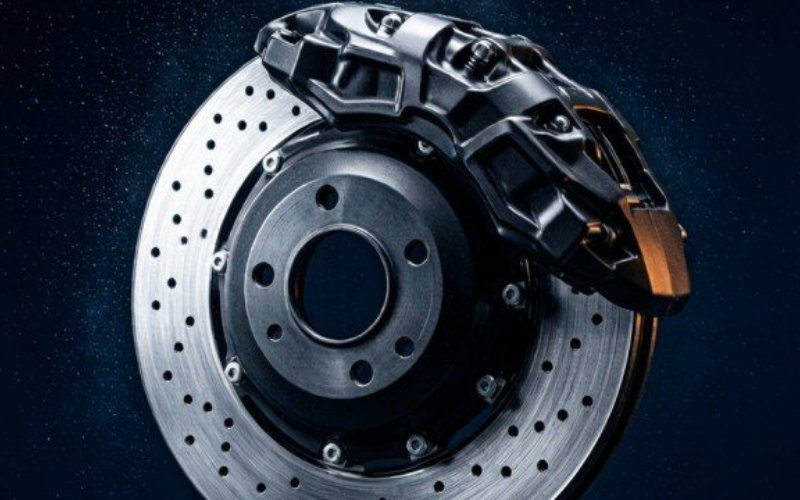
From 29 November 2026, new EU type approvals must meet brake particle limits: 7 mg/km for combustion and hybrid cars, 3 mg/km for electric. Coated rotors and low-dust friction formulations stop being a marketing line and become a specification. Expect the halls to be full of “low dust” claims. The useful question is which coating, on which reference range, and whether it survives the salt-spray and wear cycles a European winter imposes. A supplier who cannot name the coating has not made it.
Electrification is discussed at every show as if the aftermarket changes overnight. It does not: the parts a workshop buys follow the age of the fleet, not the age of the press release. What changes first is narrower and more specific — cabin filters, tyres, 12V batteries, brake components that rust rather than wear because regenerative braking uses them less, and thermal management parts. Buyers who build that list now, reference by reference, will be quoting when the volume actually arrives instead of scrambling for it.
The direction of travel is a smaller supplier panel with a wider range behind each name. Not because buyers enjoy fewer options, but because every additional supplier costs a purchase order, an inspection, a document set and a currency exposure. That is why mixed-container and one-list-one-quotation models keep appearing at shows. Test it with a real list: give three stands the same fifteen references and watch who prices all fifteen, who prices nine and promises the rest.

CBAM's definitive regime began on 1 January 2026, and embedded emissions in steel and aluminium now carry a real cost. Most buyers still treat it as an accounting exercise. It is turning into a supplier filter: a factory that can state emissions per tonne for the material in a bracket will be easier to keep than one that cannot. Ask who produces the figure, and whether it is measured or estimated — the answer separates a system from a spreadsheet.
Pick the two shifts that affect your own order book and test them, rather than collecting catalogues. Three stands per shift is enough. Write down the answer, not the impression: which references, which coating, which data fields, which lead time in writing. A show read this way produces a page of decisions; walked the other way it produces fifteen kilos of paper.
The rest of the market will still be there next year. The five shifts above will not wait for it.
Send your OE list to market@alwid.cn before 2 December — quotation within 1 hour for references in our database, 60-day standard lead time for normal export orders. Meeting details for 2–5 December →
Tell us what you need and how much of it — the searching is our side of the deal.
Quotation within 1 hour for items in our database · Standard lead time: 60 days for normal export orders


